Warning Signs of Mold to Watch for When House Hunting
House hunting puts you in problem-solving mode for almost everything including price, layout, commute, schools. Mold rarely makes the list, until it's the reason a "perfect" place turns into a costly mistake.
Whether you're touring homes to buy or apartments to rent, the good news is the same: you don't need a lab coat to catch most warning signs. You need to know where to look, and what your senses are already telling you.
This guide walks through the ten places mold and moisture problems most often hide, adapted for both buyers doing a walkthrough and renters touring a unit before signing a lease. At the end, you can download a free printable checklist to bring with you on your next showing.
Start With Your Nose
Before you look at anything, breathe. A musty, earthy smell is the single most reliable sign of active mold, which is more reliable than anything you'll see. Trust it even if you can't find the source. If a home smells "off" the moment you walk in, that's data, not paranoia.
Everything below is what to look for once that first impression has your attention.

1. Lot & Landscape
Water problems inside a home almost always start outside it.
Does the ground slope toward the house instead of away from it?
Are sprinklers spraying directly onto the house?
Is mulch, soil, or dense landscaping piled up against the exterior wall?
Renters: you can't regrade a rental property, but you can walk the perimeter during your tour and ask how the unit has handled recent storms.

2. Basements & Crawlspaces
If the home has any space below grade, (a basement, or a home built into a hillside) this is where hidden moisture tends to collect first.
Standing water, damp soil, or a musty smell in the crawlspace
A basement or lower-level room that feels noticeably cool, damp, or "off"
Renters: if you can't access the crawlspace or basement, ask directly whether the unit has ever had water intrusion below grade. It's a fair question, and how it's answered tells you a lot.

3. Home Exterior
The building envelope is what's supposed to keep water out. Gaps in it are how water gets in.
Cracked or missing caulking around windows, trim, and other penetrations
A deck or attached structure with no visible flashing where it meets the house
Additions or remodeled sections where the exterior detailing doesn't match the rest of the home

4. Roof & Attic
Flat roofs or roofs with multiple angles and planes are more failure-prone than a simple pitched roof. More valleys and transitions mean more places for water to find a way in.
Skylights are a common, often-overlooked leak point.
Visible wear, missing flashing, or a roof nearing the end of its service life.
Little or no roof overhangs (where roof meets wall)

5. Vaulted & Cathedral Ceilings
This one's easy to miss and worth calling out on its own. A vaulted ceiling needs a continuous ventilation channel running from the soffit to the ridge. Without it, warm, moist indoor air condenses against the underside of the roof deck and you'd never know it from the room below.
Does the home have vaulted or cathedral ceilings?
Are recessed can lights installed in that ceiling? Each one is a heat source that can become its own condensation point.
Any staining or discoloration near the ceiling, especially close to a light fixture.
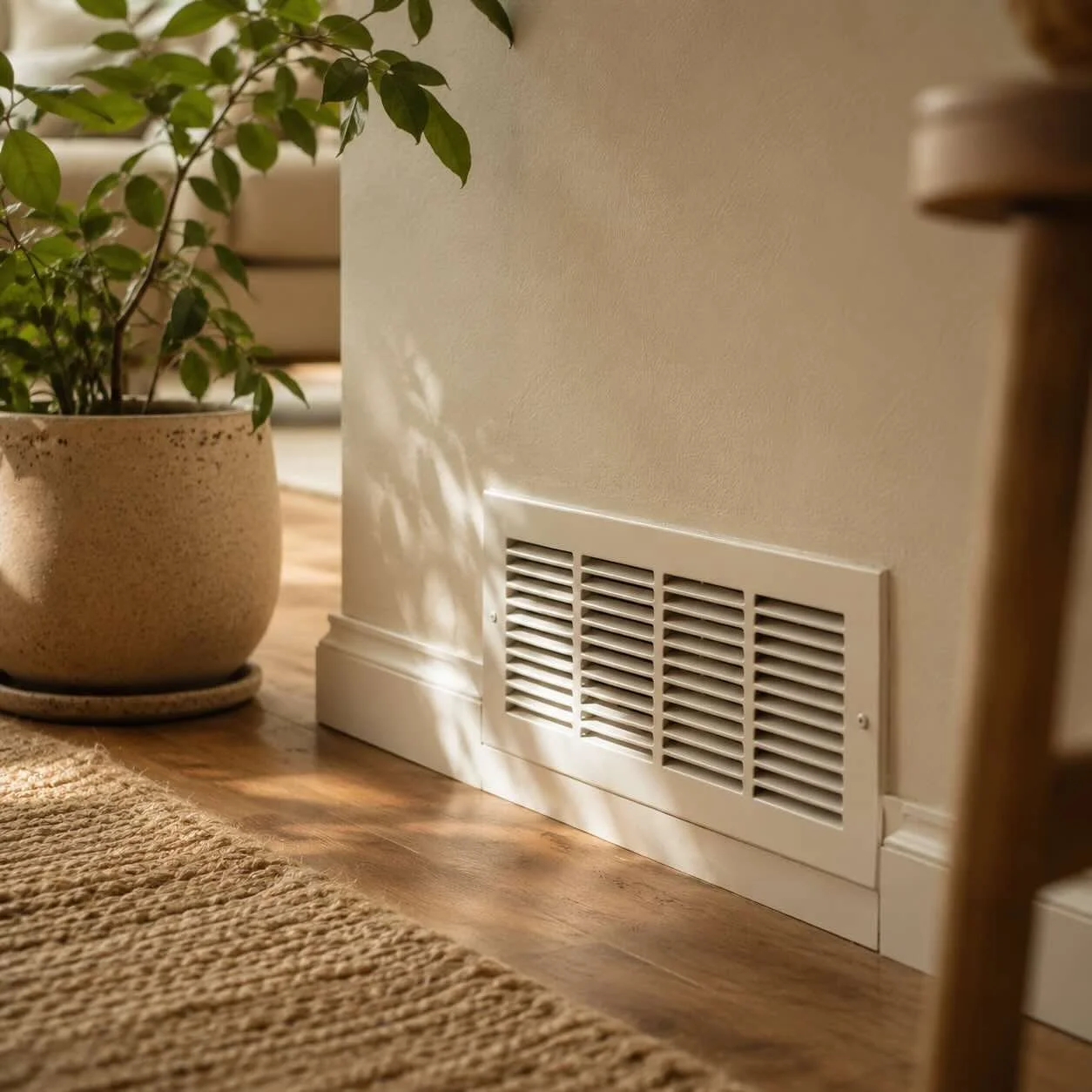
6. HVAC
A musty smell when the system kicks on is a strong sign moisture has found its way into the ductwork or coil.
Dirty, overdue filters are a smaller flag on their own, but worth noting alongside anything else on this list.

7. Kitchen
Check under the sink, around the dishwasher, and inside the pantry for a musty smell, drips, or soft, discolored flooring or cabinetry.

8. Bathrooms
A musty smell or softness under the sink or around the toilet
No exhaust fan (or one that clearly isn't used) **bathrooms without ventilation are one of the most common mold sources in any home
Cracked or degraded caulking and grout around the tub or shower

9. Bedrooms & Living Areas
Carpet deserves its own line item: it acts as a reservoir for dust and allergens, and it can hide subfloor water damage. Pay extra attention to carpet installed under windows or on walls that back up to plumbing.
A musty odor anywhere in the room
Ceiling or wall staining, especially at corners or below windows
Bubbling paint or irregular drywall texture

10. Context & History
Sometimes the most useful information isn't something you can see.
Insurance claims or disclosures that mention water intrusion
A location in a fog belt, flood zone, or area with a high water table
Seller disclosures, public records, or a previous tenant who can speak to a past leak or water event
Download the Free Checklist
You don't need to memorize this list. Print it, save it to your phone, and walk through it on your next showing.
Download: Pre-Purchase Mold Assessment Checklist (PDF)
Even if you're renting rather than buying, the same checklist works. Treat anything you can't personally verify (attic, crawlspace, roof) as a question to ask the landlord or property manager directly.
When the Checklist Raises Questions, a Test Gives You Answers
A checklist tells you where to look. It doesn't tell you what's actually in the air. A standard home inspection is a good first line of defense, but as the National Association of Realtors notes, health-specific testing for issues like mold often falls outside a general inspection's scope. That's what a pre-purchase mold test is for. A good one is built to answer three specific questions:
Does the home have a verifiable mold problem?
Does the mold problem pose a health risk?
How much of a health risk is it?
If your walkthrough turned up more than one or two flags on the checklist, or if that musty smell never quite explained itself, those are exactly the three questions worth getting real answers to before you sign anything.
Ready to test before you commit? Order your Pre-Purchase Mold Test or explore our full walkthrough checklist and testing options at healthyhomessimplified.com.
